
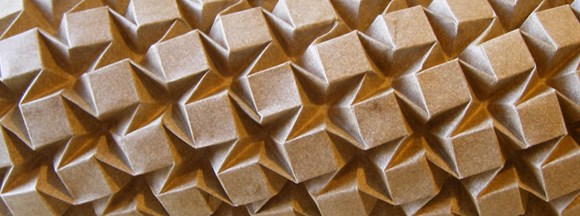
An early post on the blog put forward the idea that information, more than matter and energy, was responsible for the utility of objects. Recognizing the separation of information from these more traditional "stuff" delineators makes for new, and exciting opportunities for manufacturers. One of the fundamental tenets of Humblefacture is that complex order -- valuable information -- can be confered to matter without overly expensive machinery, or outrageous expenditure of energy. Moreover, because this order in the final object can at some point be described as information (a digital file, for example), this methodology of fabrication opens the door to global remix, re-purposing, and conversation, without the need to send heavy matter. This would fundamentally upset the current "developed vs developing" world structure -- designers everywhere would be able to make anything they had the wit to crystalize out of a single share idea ocean. While this might seem outrageous to product designers (I know I've gotten weird looks from my fellow IDSAers), practitioners of origami have been used to it for a while.

A fundamental tenet of Humblefacture is the importance of scale. Yes, material composition of products is important. And certainly the location of production realative to use is also key. But the concept of scale implies that there are some intensities, or sizes, or durations which are simply too large to fit within the Humblefacture framework. The reason for this, it turns out, is that there is one common unit we all share - the human.

Recently, Humblefacture (and our lab The Humblefactory) have been exploring the potential of open source product design as a part of a more equitable, appropriate manufacturing. Chris Anderson at Wired Magazine has also been interested in this sort of thing for a little while; A recent article of his profiled a number of small-scale producers using open design and flexible manufacturing to make niche products that can compete with the big boys. It's great to see a big voice like Chris behind the open hardware movement (even better, his money is where his mouth is, with the success of his DIY Drones company). Even so, we can't help but think that the future that Chris describes doesn't go far enough. Where "the next industrial revolution" he describes has an open, but still top-down manufacturing structure (finished objects are still made by single manufacturers, just smaller ones, more flexibly) we imagine something entirely new. With a few tweaks, we might have manufacturing with unprecedented accessibility and specificity. You might call it cloud manufacturing, and it could be the most important step toward true locally appropriate manufacturing.

Humblefacture might sound like a great idea, with two conditions. First, it will be possible in the future, but not now. And second, it only works for things like furniture, and maybe bikes, but nothing complex. In fact, the principles of Humblefacture can be applied to even the most complicated types of products, and using existing fabrication technologies. A perfect example of this is how the SSG framework, developed at The Humblefactory, allows currently available electronics to waste less, keep value longer, and most importantly, better meet the needs of their users.

Humblefactory founder Dominic Muren has been named a 2010 TED Global fellow for his work on open manufacturing!
I can't wait to get this group of fellows and TEDsters from around the world thinking about the possibilities of a truly open, shareable, flexible manufacturing infrastructure! Even cooler, Neil Gershenfeld, author of FAB and head honcho of Digital Fabrication at MIT's Center for Bits and Atoms will be there speaking. I'm hoping to push pretty hard for real, modular, open electronics development, among other things. If you've got suggestions, I'd love to hear them in the comments.

 Posts



