
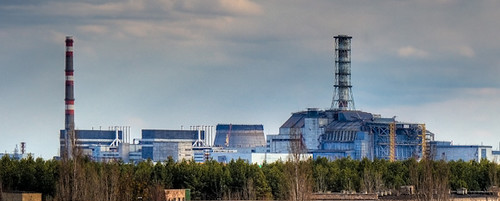
A fundamental tenet of Humblefacture is the importance of scale. Yes, material composition of products is important. And certainly the location of production realative to use is also key. But the concept of scale implies that there are some intensities, or sizes, or durations which are simply too large to fit within the Humblefacture framework. The reason for this, it turns out, is that there is one common unit we all share - the human.
Showing posts with label design and society. Show all posts
Showing posts with label design and society. Show all posts
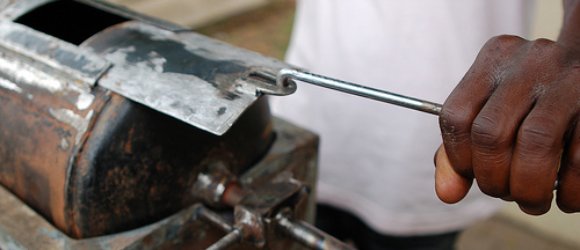
Seems like every week there is some new type of punk steering aesthetics or technology. From punk rock, to post-punk, Cyberpunk, Steampunk, even Biopunk, these gritty ways of life have tried to gain your interest and allegiance. Humblefacture, thought also an ethos which could result in a distinctive styling of product, will hopefully escape the fadish fadings of these movements. But in order to imagine what Humblefacture might become, it might help to compare it to the latest crowd of punks onto the scene -- the Bushpunks.
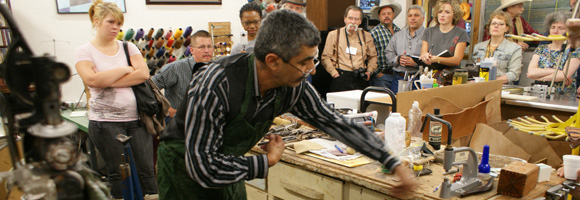
Maybe it's the smell of pencils and college-ruled paper in the air, but politicians in the U.S. are going positively education-crazy. Arne Duncan, education secretary, gave an interview and speech disclosing radical overhauls of our current "No Child Left Behind" policy. President Obama urged students to stay in school, and work hard to learn the skills that would help them compete in a global market. There is good reason that these important people are spending time and effort looking into the affairs of children. Simply put, we have problems to large, numerous, and long-term to be dealt with by the current generation of workers. The question is, how can you train a generation to fabricate a new future without giving them the tools of fabrication?

There is a persistent dream (or self delusion) among eco-minded product designers that somehow, manufacturing before the industrial revolution was "better"; Cottage industry was safer, or cleaner, or fairer, or used fewer resources -- or all of the above. Often, this ideal is backed up with anecdotes of textile mills replacing home-spinners, or IKEA replacing cabinet makers. Certainly, these stories of machinery displacing or invalidating jobs (The British still use the mechanistic term "made redundant" to describe layoffs) are true -- but does this mean that a socially sustainable future must involve some return to pre-agricultural cave dwelling? Of course not. But charting a path to such a future requires a re-examination of the human difference between a tool and a machine.

Humblefacturing the future has positive implications for all kinds of things, from improving economic stability, to greater personal freedom. But one more crucial added bonus of working toward a more humble, visible, local way of making will be the effect on the people involved in that making. In the recent bestselling book "Shop Class as Soulcraft", author Matthew Crawford explores the real impacts that tangible technical labor has on the development of elementary and secondary students. Indeed, since the 1980s the rise of rhetoric about the coming information economy, and the need for "knowledge workers" has driven a serious recline in the way we value manual labor, particularly skilled labor. But as we have seen in the 30 years that followed, more information didn't decrease our need for complicated physical fabrication. In fact it has only increased with growth in robotics, nanotechnology, and a need for new materials to meet the need for carbon neutral and renewable objects. To get a better idea of the scope of the problem, and the potential for the solution, check out Matthew's original essay for The New Atlantis. And we know that our readership is full of makers, so sound off in the comments about your experiences with making for the soul.
The Colony, the newest project from Original Productions (creators of Deadliest Catch, among others) presents a group of "survivors" with the task of rebuilding civilization in the face of a viral plague and massive infrastructure breakdown. Realistically, it seems like junkyard wars with a slightly campy storyline (there are gangs of motorcycle thugs who periodically harass the group, among other things). It does, however, do a wonderful job of illustrating how difficult it would be for even a highly trained group (they've got a rocket scientist, for crying out loud) to quickly and smoothly respond to the kind of societal bump that a major epidemic would present. By focusing on low-energy, low education, highly flexible methods of manufacturing, Humblefacture seeks to make this sort of scenario much easier to respond to. It will be interesting to watch and see how changes like pervasive personal fabbing technology might alter the way this scenario unfolds.

Salon has a great review of Ellen Ruppel Shell's new book Cheap: The High Cost of Discount Culture. The Salon piece, by Stephanie Zacharek, looks particularly at design giant IKEA, and the real costs of using low cost as the metric by which we judge all value in products. IKEA is a good case for exploration, because on the one hand it is so well loved (compared, say, to Walmart), while on the other, it is the largest consumer of timber for furniture in the world, much of it from China. And China has some timber sourcing practices that are dubious, to say the least.
I'm very excited to read the book, because it seems to finally acknowledge that problems like environmental degradation are only symptoms. What is really sick is some more fundamental aspect of our relationship to material goods. As Shell points out in the short promo video for the book, it wasn't so long ago that "cheap" meant something entirely different, both when describing a product, and its purchaser. Many of the goals of Humblefacture will require that products become more expensive than they are now. I don't believe (And I hope the book will help to bear me out) that this higher monetary price will mean that the value of the object won't be worth it. My hope is that for a small increase in monetary cost, we can significantly impact social, environmental, community, and many other costs which don't get figured into IKEA's big blue pricetags.

Our readers in the United States will have recently spent a weekend evening grilling, relaxing, and lighting off fireworks in celebration of the signing of the Declaration of Independence, one of the founding documents if the United States. Along with The Constitution, and its amendments, collectively the Bill of Rights, this document served to align and direct the efforts of the newly born nation. More importantly, with these documents our founders hoped to ensure (or at least suggest) that subsequent generations might work to maintain the country's formative values and goals, even in the face of new social, political, and technological developments. In honor of Independence Day, and in keeping with this charge of re-examination of our national foundation in light of new technologies, let me propose a new clause of amendment one of the Bill of Rights:
Making is Speech.
I gave a talk introducing Humblefacture to the world at last week's Ignite Seattle conference. You can see the video of the talk above, and link to the slides on slideshare here. The manifesto has since grown by at least one point, and a thorough exploration of the ins and outs of defining this movement is forthcoming, so stay tuned. In the meantime, we at Humblefacture would love to hear any feedback you might have.

Localism is precious. American Apparel's "locally made" t-shirts command a premium and are worn by hipsters the world over. "Locavore" has joined the ranks along with "vegan" and "vegetarian", and even has the approval of Oxford's. Local production has huge benefits, from reducing energy required in transport, to allowing consumers to form connections with their producers, to limiting negative environmental and social impact of manufacture. But even with so many potential benefits, the majority of materials and processes we use to make items simply do not lend themselves to local-scale manufacture.

Pick up something off of your desk. That something was manufactured -- made -- using a process or series of processes. Maybe it was carved out of wood, cast in metal, or fired in ceramic. More likely it was molded in plastic or assembled by a robot in a pick-and-place electronics assembly line. Manufacturing and manufactured objects define our cultures and resource usage strategies, and influence the constitution of our societies. Changing the fundamental assumptions about how we should make objects could change the face of our society, and the problems it faces.

 Posts
Posts



